

Scroll down for english
+
Christus is gebore! Verheerlik Hom!
Ons het Woensdag die Fees van die Geboorte van Christus gevier. Dié van julle wat dit saam met ons gevier het, sal weet dat dit ‘n heerlike, feestelike geleentheid was – soos dit moet wees, want ons het die wonder van die Menswording van God gevier.
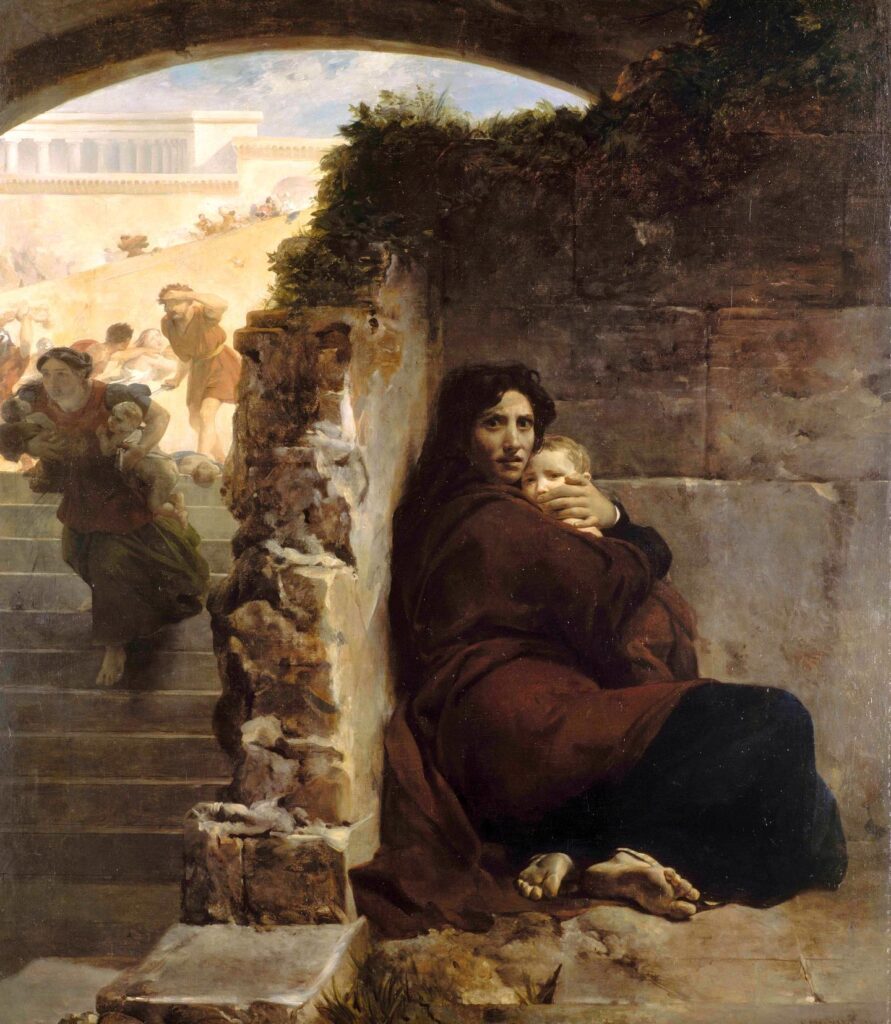
Maar hoe versoen jy Kersfees met ‘n klomp dooie babatjies? Die slagting van die babatjies van Bethlehem en omstreke in opdrag van Herodus word gewoonlik verswyg, omdat dit so ‘n wanklank gee aan die vreugdevolle wondere van die Kersgebeure.
Want as jy die gebeure vierkant in die oë kyk en enige sensitiwiteit het, of al ‘n behoorlike verlies in jou lewe ervaar het, sal jy die woorde van die profeet Jeremia ook in jou hart hoor weerklink:
“‘n Stem is in Rama gehoor: rouklag en geween en groot gekerm; Ragel beween haar kinders en wil nie vertroos word nie, omdat hulle daar nie meer is nie.”
Almal van ons ervaar op een of ander tyd so ‘n verwoesting in ons lewens: iets wat op die oog af reddeloos sleg is, wat mens jou laat voel dat jy die slagoffer was van ‘n boosheid wat sonder beheer in die wêreld rondgaan. Iets wat jou matelose lyding veroorsaak – rouklag en geween en groot gekerm – dikwels met permanente gevolge en letsels, wat jou laat twyfel aan God se goedheid en soms aan God self.
Hoe moet ons as Ortodokse Christene met sulke gebeure in ons lewens maak? Hoe moet ons daaroor dink? Hoe moet ons daarvan sin maak?
Ons moet begin deur ons daarvan te weerhou om ‘n rasionele verduideliking vir ons lyding te probeer soek. Daar is baie mense wat kwaad word, aandring by God op ‘n oorsaak-en-gevolg verduideliking, of met God wil redeneer om die lyding te verminder. Aanvaar dit van iemand af wat al in diep grotte vir rasionele verklarings vir lyding gaan soek het: daar bestaan nie so iets nie. Maar belangriker: daar is ‘n probleem met die soektog self.
Vandag is die feesdag van Josef die Verloofde. In die ikoon van die Geboorte sit hy gewoonlik in een hoek en luister na ‘n ou man in ‘n velkleed. Dit verwys na die tradisie dat Josef tydens Christus se geboorte buite die grot gewag het en toe besoek is deur Satan in die vorm van ‘n ou skaapwagter, wat hom versoek het met die vraag of Maria inderdaad ‘n maagd was. Hierdie vraag is dieselfde vraag as wat ons vra wanneer ons vir rasionele verduidelikings vir lyding soek: Kan God ook in die verskrikking wees? Hoe kan ons die almag van God en die verskrikking van die verwoesting terselfdertyd in ons gemoed hou? Die rasionele soeke na verduidelikings is daarom ‘n soeke van vertwyfeling, ‘n soeke wat ook ‘n aftakeling van ons geloof is.
Dit is ook ‘n beperkte soeke. Die verwoesting van die slagting onder die onskuldiges staan teen die agtergrond van twee ander slagtings van kinders: dié wat deur Farao teen die Israelitiese kinders op tou gesit is tydens hulle verblyf daar, en wat deur God beantwoord is met die slagting van die eersgeborenes van die Egiptenare. En Mattheus trek ‘n direkte verband met die oënskynlik sinlose lyding van die Israeliete as hy die profeet Hosea aanhaal wat sê: “Uit Egipte het Ek my Seun geroep,” wat enersyds na Israel verwys maar andersyds ook na Christus.
Wat beteken al hierdie dinge? Dis moeilik om te sê, maar vir die huidige hoef ons net te sê dat enige behoorlike begrip van die betekenis van die slagting van die onskuldiges dié gebeure van meer as ‘n duisend jare voor Christus ook moet verreken. En wie weet, dalk ook die slagting in ons eie tydsgewrig van onskuldige kinders met aborsies, wat wêreldwyd ongeveer 73 miljoen kinders per jaar beloop.
Dit behoort duidelik te wees dat die konteks waarin ons lewe plaasvind eenvoudig te groot vir rasionele verduidelikings is – ons brein is eenvoudig te klein.
Daar is nog iets om oor na te dink. Dit is dat wanneer die Lewe die skepping binnetree, die Dood reageer en meesal op ‘n gewelddadige manier. Wanneer die Christuskind vreugde na die aarde bring, reageer die Bose met woede en geweld. Dis iets om te onthou in ons eie lewe. Soms is ons lyding en verskrikking die gevolg van die woede van die Bose oor die geboorte en groei van die Lewe in ons.
Ek sê dit want ek praat soms met mense wat van donker plekke af by die Kerk aankom, en ek hoor in hulle vrae ‘n vrees vir wat die Bose hulle kan aandoen omdat hulle nou na die Lig en die Lewe toe gedraai het.
Ons moet onthou dat die Bose met die slagting van die onskuldige babatjies van Bethlehem nie in sy doel geslaag het nie. God het sy Kind en sy heilsplan bewaar deur vir Josef in ‘n droom te waarsku om betyds te vlug; en hom ook na Israel laat terugkom toe Herodus ‘n paar jaar ná die slagting dood is. Hy sal ook vir jou en vir my beskerm teen die planne van Satan. Die bose mag mag verwoesting in jou lewe saai, maar is kragteloos om God se heilsplan vir jou en vir my te dwarsboom. Elkeen van ons wat al vir ‘n rukkie die pad met God stap, sien met die terugkyk dat ten spyte van die lyding en onsekerheid wat ons so dikwels ervaar, God die besonderhede van ons lewe haarfyn beplan en uitgevoer het, as ons maar bly glo dat dit die geval is.
Die ikoon van die Geboorte bevat ook ‘n ander simbool wat ons in gedagte moet hou. Waar die Christuskind in die krip lê, lyk Hy baie soos dooies wat in ander ikone in uitgekapte graftombes lê. Christus kom lê simbolies reeds by sy geboorte in ‘n graf, en kom wys daarmee dat Hy kom lewe het om te sterf.
Maar die doding van Christus deur die Dood het die verwoesting van die Dood beteken – en hierin lê ook ‘n sleutel tot ons benadering tot die verskrikkinge van ons lewe. Want Paulus sê in 2 Kor 4:
“Gedurig dra ons die doding van die Here Jesus in die liggaam om, sodat ook die lewe van Christus in ons liggaam openbaar kan word.
Want altyd word ons wat lewe, oorgelewer in die dood om Jesus wil, sodat ook die lewe van Jesus in ons sterflike vlees openbaar kan word.”
Is dit ‘n verduideliking vir hoekom ons verwoestings in ons lewe ervaar? Nee. Maar dit bevestig dat dit nie moontlik is om ‘n Christen te wees sonder om ons kruis daagliks op te neem en Christus te volg nie. Die Heilige Sophronius van Essex het gesê, “Die weg van die Here in hierdie wêreld is altyd die weg van die Kruis en van vernedering.” Maar hy het ook gesê: “Die heerlikheid van die Eniggeborene is gemanifesteer in die uiterste vernedering van sy aardse lewe.”
Dis merkwaardig dat die Christene van die eerste eeue die onmoontlike reggekry het: om binne 280 jaar die heidense Romeinse beskawing op sy kop te keer en met ‘n Christelike beskawing te vervang. En hoe het hulle dit gedoen? Deur die manier waarop die martelare die verwoesting van hulle lewens vir Christus hanteer het.
God het die vermoë om die verwoesting van ons lewe in sy verheerliking en ons vergoddeliking te omskep. Ons kan daaraan vashou, want Hy sál dit doen. Hy is besig om dit te doen.
Aan Hom wat Hom verwerdig het om vir ons verlossing in ‘n krip te lê en die dood deur die dood te vernietig, kom toe die lof en die eer en die aanbidding, nou en altyd en tot in ewigheid. Amen.

Christ is born! Glorify Him!
On Wednesday we celebrated the Feast of the Nativity of Christ. Those of you who celebrated it with us will know that it was a wonderful, festive occasion—as it should be, for we celebrated the miracle of the Incarnation of God.
But how do you reconcile Christmas with a multitude of dead babies? The slaughter of the infants of Bethlehem and its surroundings, carried out on the orders of Herod, is usually passed over in silence, because it strikes such a discordant note against the joyful wonders of the Christmas events.
For if you look these events squarely in the eye and have any sensitivity at all, or have already experienced a significant loss in your life, you will also hear the words of the prophet Jeremiah resounding in your heart:
“A voice was heard in Ramah, lamentation and bitter weeping; Rachel weeping for her children, refusing to be comforted, because they are no more.”
All of us, at one time or another, experience such devastation in our lives: something that appears utterly hopeless, that makes one feel as though one has been the victim of an evil roaming the world without restraint. Something that causes immeasurable suffering—lamentation and weeping and bitter crying—often with permanent consequences and scars, which make you doubt God’s goodness and sometimes God Himself.
How should we, as Orthodox Christians, deal with such events in our lives? How should we think about them? How should we make sense of them?
We must begin by restraining ourselves from trying to find a rational explanation for our suffering. There are many people who become angry, who press God for a cause-and-effect explanation, or who want to argue with God in order to lessen the suffering. Take it from someone who has gone searching in deep caves for rational explanations for suffering: no such thing exists. But more importantly, there is a problem with the search itself.
Today is the feast day of Joseph the Betrothed. In the icon of the Nativity he usually sits in one corner, listening to an old man dressed in a sheepskin. This refers to the tradition that Joseph waited outside the cave during Christ’s birth and was then visited by Satan in the form of an old shepherd, who tempted him with the question of whether Mary was indeed a virgin. This question is the same question we ask when we search for rational explanations for suffering: Can God also be present in horror? How can we hold together in our minds both the omnipotence of God and the horror of devastation at the same time? The rational search for explanations is therefore a search born of doubt—a search that also entails the erosion of our faith.
It is also a limited search. The devastation of the slaughter of the innocents stands against the background of two other massacres of children: those ordered by Pharaoh against the Israelite children during their sojourn in Egypt, and those answered by God with the slaughter of the firstborn of the Egyptians. And Matthew draws a direct connection with the apparently senseless suffering of the Israelites when he quotes the prophet Hosea, who says: “Out of Egypt I called My Son,” which on the one hand refers to Israel, but on the other hand also to Christ.
What do all these things mean? It is difficult to say, but for now it is enough to say that any adequate understanding of the meaning of the slaughter of the innocents must also take into account those events that occurred more than a thousand years before Christ. And who knows—perhaps also the slaughter in our own time of innocent children through abortions, which worldwide amount to approximately 73 million children per year.
It should be clear that the context in which our lives take place is simply too vast for rational explanations—our minds are simply too small.
There is something else to consider. When Life enters creation, Death responds, and usually in a violent way. When the Christ Child brings joy to the earth, the Evil One responds with rage and violence. This is something to remember in our own lives. Sometimes our suffering and horror are the result of the rage of the Evil One at the birth and growth of Life within us.
I say this because I sometimes speak with people who arrive at the Church from dark places, and I hear in their questions a fear of what the Evil One might do to them because they have now turned toward the Light and the Life.
We must remember that the Evil One did not succeed in his aim with the slaughter of the innocent babies of Bethlehem. God preserved His Child and His plan of salvation by warning Joseph in a dream to flee in time, and by bringing him back to Israel when Herod died a few years after the slaughter. He will also protect you and me against the plans of Satan. The evil one may sow devastation in your life, but he is powerless to thwart God’s saving plan for you and for me. Each of us who has walked the path with God for some time can see, in hindsight, that despite the suffering and uncertainty we so often experience, God has planned and carried out the details of our lives with exquisite precision—if only we continue to believe that this is so.
The icon of the Nativity also contains another symbol that we must keep in mind. Where the Christ Child lies in the manger, He closely resembles the dead who, in other icons, lie in hewn rock tombs. Symbolically, Christ already lies in a tomb at His birth, thereby showing that He came to live in order to die.
But the killing of Christ by Death meant the destruction of Death—and herein also lies a key to our approach to the horrors of our lives. For Paul says in 2 Corinthians 4:
“Always carrying in the body the death of the Lord Jesus, so that the life of Jesus may also be manifested in our body.
For we who live are always being delivered over to death for Jesus’ sake, so that the life of Jesus may also be manifested in our mortal flesh.”
Is this an explanation of why we experience devastation in our lives? No. But it does confirm that it is not possible to be a Christian without taking up our cross daily and following Christ. Saint Sophronius of Essex said, “The way of the Lord in this world is always the way of the Cross and of humiliation.” But he also said: “The glory of the Only-Begotten was manifested in the extreme humiliation of His earthly life.”
It is remarkable that the Christians of the first centuries achieved the impossible: within 280 years they turned the pagan Roman civilization upside down and replaced it with a Christian civilization. And how did they do it? Through the way in which the martyrs dealt with the devastation of their lives for Christ.
God has the ability to transform the devastation of our lives into His glorification and our deification. We can hold fast to this, because He will do it. He is doing it.
To Him who deemed it worthy, for our salvation, to lie in a manger and to destroy death by death, belong the praise and the honor and the worship, now and always and unto the ages of ages. Amen.