


Scroll down for English
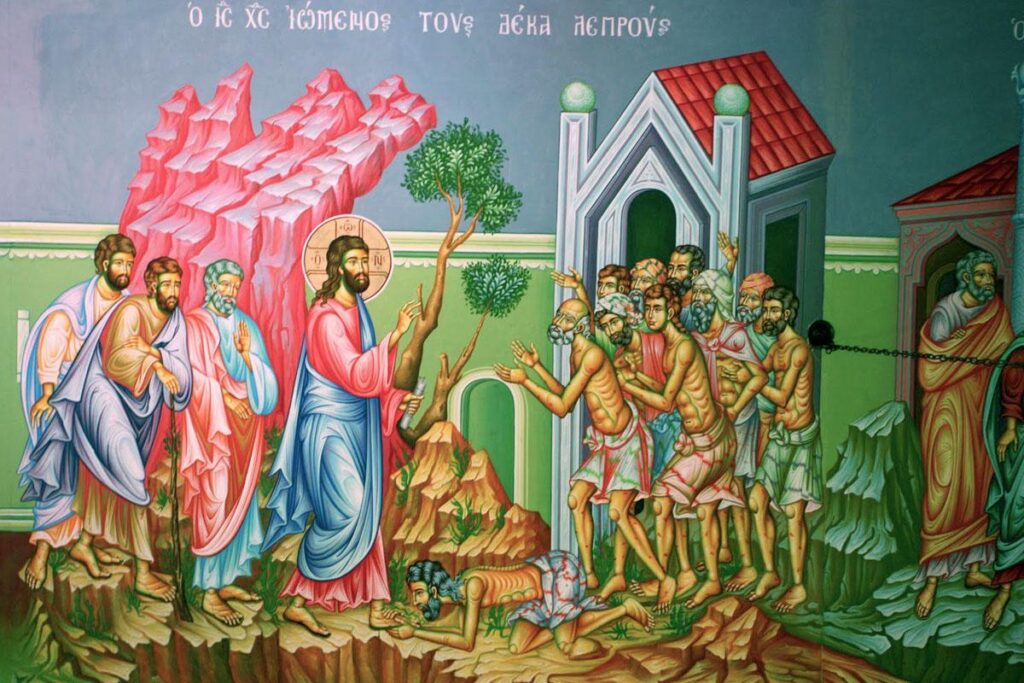
Op die oog af is die boodskap van die verhaal van die 10 melaatses eenvoudig: Jy moet dankbaar wees vir wat jy God jou gee.
Maar agter hierdie skynbaar eenvoudige stelling skuil ‘n groot en veelkantige onderwerp, waaroor ek ‘n voëlvlug wil neem, om julle hopelik te motiveer om self verder daaroor te gaan lees en nadink.
Sodra mens op soek gaan na dankbaarheid, sien jy dit oral. In die Ou Testament noem ek uit tallose voorbeelde net twee: Abraham die Regverdige, wat, telkens wanneer hy in sy omswerwinge ‘n teken ontvang het van God se liefde en beloftes, ‘n altaar gebou het: by Sigem, Hebron, Betel, Mamre, Berseba en die berg Moria. In die Psalmboek, die gebedeboek van die Kerk, is daar naas enkele verse in haas elke Psalm, spesifieke dankpsalms: 100, 103, 107, 136.
Die gebeure van Nuwe Testament begin met die lofsang van Maria en dan van Sagaria, die vader van Johannes. Christus self het talle kere wanneer Hy brood gebreek het, God eers gedank; en so ook later die apostels. Paulus se sendbriewe is deurspek met raad en aanmanings oor danksegging. En in Openbaring is daar ‘n paar geleenthede wat danksegging aan God gebring word.
Ook die Kerkvaders het deur die eeue dikwels geskryf oor danksegging.
“Ondankbaarheid,” sê die Heilige Maksimos die Belyder, “is die gevolg van hoogmoed, van die toe-eiening vir onsself van die gawes wat God aan ons gegee het. Wanneer God hierdie gawes wegneem, leer Hy ons om terug te keer na die Gewer van die gawes, met dankbaarheid.”
Hierteenoor is danksegging ‘n daad van nederigheid, ‘n erkenning van ons afhanklikheid van God. ‘n Goeie voorbeeld hiervan is wanneer ons tydens die Anafora, die Offergedeelte van die Goddelike Liturgie, saam met die priester tydens die opheffing van die Gawes uitroep: “Offer ons U wat aan U behoort, uit wat aan U behoort – in alles en vir alles.” Ons kan inderdaad niks van ons eie aan God offer nie. Al wat ons kan doen, is om aan Hom die Gawes wat uit sy hand na ons gekom het, in dankbaarheid terug te gee.
En die Kerkvaders sê dat as ons deur ons danksegging bewus word van die oorweldigende gawes van God aan ons, word ons terselfdertyd bewus van ons onwaardigheid om hierdie gawes te ontvang, en van die onverskilligheid waarmee ons met hierdie gawes omgaan. Daarom lei danksegging tot ‘n sondebesef en die belydenis van ons sondes. Mens sien dit duidelik in die volgende worode van Psalm 50: “Want as U ‘n offer verlang het sou ek dit gegee het. In offergawes en brandoffers sal U geen behae hê nie.
’n Offer aan God is ‘n verbryselde siel, ‘n verbryselde en vernederde hart sal God nie verag nie.”
Vr Stephen Freeman lig ‘n idee uit wat implisiet is in wat die Kerkvaders sê: dat danksegging sonder Iemand om te bedank, nie moontlik is nie; en dat danksegging daarom ‘n daad van gemeenskap is – met God en met die mense wat saam met ons dankbaar is. Dankbaarheid is ‘n manier om in verhouding met God te wees; mens sou kon sê dié manier om in verhouding met God te wees.
Daarom loop danksegging en aanbidding altyd saam, soos wat ons ook in vanoggend se verhaal sien: “En een van hulle, toe hy sien dat hy gesond was, het omgedraai en God met ‘n groot stem verheerlik. En hy het op sy aangesig neergeval by sy voete en Hom gedank.”
Ons sien dit ook in die lied wat volg op die uitroep tydens die Anafora waarvan ek netnou het, wat bevestig dat ‘n besef van God se genadige goedheid lei tot lofprysing en dank, tot gebed en aanbidding. Luister bietjie vanoggend mooi na die woorde van die lied:
“Prys ons U, loof ons U, dank ons U o Here,
en bid ons tot U, en bid ons tot U, en bid ons tot U ons God.”
In sy wonderlike kommentaar op die Goddelike Liturgie wys die Heilige Nicholas Cabasilas daarop dat die sameloop van danksegging en belydenis ook geïmpliseer word in die talle kere wat ons “Here, ontferm U” tydens die litanieë bid. En hierdie danksegging is een van die basiese temas van die Liturgie, want in sy wese is die Liturgie ons reaksie op die Gawe van God se oorwinning oor die dood in Christus; en op die ewige lewe wat Hy ons skenk.
Dit is ook hoekom die antieke Griekse woord vir dit wat later in die Weste bekend geword het as die Nagmaal of Kommunie, Eucharistie is, wat danksegging beteken. Ek wil voorstel dat ons dit baie meer gebruik, omdat dit ons sal herinner aan die regte reaksie op God se Gawes en op dit waarmee ons besig is tydens die hoogtepunt van die Liturgie.
Ek wil terugkeer na die verhaal wat ons vanoggend gelees het. Dit eindig met die enigmatiese woorde van Christus: “Staan op en gaan, jou geloof het jou gered.”
Mens se aanvanklike reaksie is Christus se woorde oorbodig is – die man is immers genees, en dis hoekom hy omgedraai en teruggekeer het. Maar soos ek al dikwels in die verlede gesê het, het Christus met meeste van sy genesings op twee vlakke gewerk: die fisiese en die geestelike. Die Samaritaan is nie alleen van sy melaatsheid genees nie – sy siel is ook genees en gered.
Hierdie redding het plaasgevind as gevolg van die melaatse se geloof, omdat danksegging volgens die Kerkvaders altyd ‘n geloofsdaad is. Hoe? Dis pas wanneer ons besef dat die gawes wat ons elke dag ontvang van ‘n Gewer af kom en dat dit in liefde aan ons gegee word, dat ons dankbaar kan begin word. Maar ons dankbaarheid moenie net beperk word tot die huidige en die materiële nie.
Dit moet ook die perspektief insluit dat die ganse omvang van ons bestaan deur God in genade en liefde gereël word, met die doel om ons te red en ons met Homself te verenig. Dan sal ons in geloof kan verstaan wat die Heilige Apostel Paulus in Efesiërs 5:20 sê: “terwyl julle God die Vader altyd vir alles dank in die Naam van onse Here Jesus Christus.” Let op, nie “in” – ten spyte van – alles nie, maar “vir” alles – ook vir die tragedies van die lewe wat ons oorkom.
Want die tragedies van die lewe dra by tot ons heiligmaking, laat ons anders na onsself en ons medemens kyk, maak ons harte sagter vir ander se seer, maak ons in’t kort meer menslik en meer goddelik.
Dit is die perspektief waaruit ons moet verstaan wat die Heilige Johannes van Kronstadt gesê het: “Wanneer jy onderwerp word aan die kwaadwillige en verwoede geweld van die passies, en die teistering van die Duiwel, terwyl jy verskeie werke vir God doen, aanvaar hierdie swaarkry as lyding in die naam van Christus, en verheug jou in jou swaarkry, terwyl jy God dank.” Dit is net moontlik as ons geloof het.
Ek sluit af met twee aanhalings oor hoe ons danksegging prakties moet uitleef. Eers die Heilige Basilios die Grote:
“As jy gaan sit om te eet, bid. Wanneer jy brood eet, doen dit met dank aan Hom vir sy oorvloedige gulhartigheid teenoor jou. As jy wyn drink, dink aan Hom wat dit aan jou gegee het vir jou genot en as verligting in siekte. Wanneer jy jou aantrek, dank Hom vir sy goedheid omdat Hy jou van klere voorsien. Wanneer jy na die hemelruim en die skoonheid van die sterre kyk, werp jouself voor God neer en aanbid Hom wat in sy wysheid alles so gerangskik het. Op dieselfde wyse, wanneer die son ondergaan en wanneer dit opkom, wanneer jy slaap of wakker is, betuig dank aan God, wat alle dinge tot jou voordeel geskep en gereël het, sodat jy die Skepper daarvan kan ken, liefhê en prys.”
Die Heilige Petrus van Damaskus het iets soortgelyk gesê, en afgesluit met:
“In’t kort, as alles wat jy doen ‘n geleentheid word om God te verheerlik, sal jy bid sonder ophou. En op hierdie manier sal jou siel altyddeur bly wees, soos wat die Heilige Paulus ons aansê.”
Aan die Gewer van alle goeie gawes kom toe die lof en die eer en die aanbidding, nou en altyd en tot in ewigheid, Amen.
At first glance, the message of the story of the 10 lepers is simple: You must be grateful for what you receive from God. But this seemingly simple statement hides a large and multifaceted topic, about which I want to take a very quick bird’s-eye tour, in the hope of motivating you to read and think further about it yourselves.
As soon as one goes in search of gratitude, one sees it everywhere. In the Old Testament I will mention, from countless examples, only two: Abraham the Righteous, who, whenever he received in his wanderings a special sign of God’s love and promises, built an altar: at Shechem, Hebron, Bethel, Mamre, Beersheba, and Mount Moriah. The Book of Psalms contains, besides a few verses in almost every Psalm, specific psalms of thanksgiving: 100, 103, 107, 136.
The events of the New Testament begin with the hymn of praise of Mary and then of Zechariah, the father of John. Christ Himself, many times when He broke bread, first thanked God; and later so did the apostles. Paul’s epistles are littered with counsel and exhortations about thanksgiving. And in Revelation there are several occasions where thanksgiving is offered to God.
The Church Fathers also, through the centuries, often wrote about thanksgiving.
“Ingratitude,” says St Maximos the Confessor, “is the result of pride, of appropriating for ourselves the gifts that God has given us. When God removes these gifts, He teaches us to return to the Giver of the gifts, with gratitude.”
By contrast, thanksgiving is an act of humility, an acknowledgement of our dependence on God. A good example of this is when, during the Anaphora or the Offertory of the Divine Liturgy, we exclaim together with the priest during the elevation of the Gifts: “We offer to You what is Yours, from what is Yours—in all and for all.” We cannot in fact offer anything to God. All we can do is return to Him, in gratitude, the Gifts that have come to us from his hand.
And the Church Fathers say that when, through our thanksgiving, we become aware of the overwhelming gifts of God to us, we at the same time become aware of our unworthiness to receive these gifts, and of the indifference with which we treat them. Therefore thanksgiving leads to an awareness of sin and the confession of our sins. One sees this clearly in the following words of Psalm 50: “For if You had desired an offering, I would have given it. In offerings and burnt offerings You will take no pleasure.
A sacrifice to God is a broken spirit; a broken and humbled heart God will not despise.”
Fr Stephen Freeman highlights an idea implicit in what the Church Fathers say: that thanksgiving without Someone to thank is not possible; and that thanksgiving is therefore an act of communion—with God and with the people who are grateful with us. Gratitude is a way of being in relationship with God; one could even say the way of being in relationship with God.
Therefore thanksgiving and worship always go together, as we also see in this morning’s story: “And one of them, when he saw that he was healed, turned back and glorified God with a loud voice. And he fell on his face at His feet and thanked Him.”
We also see it in the hymn that follows the exclamation during the Anaphora I just referred to, which confirms that an awareness of God’s gracious goodness leads to praise and thanksgiving, to prayer and worship. Listen carefully this morning to the words of that hymn.
In his wonderful commentary on the Divine Liturgy, St Nicholas Cabasilas points out that the concurrence of thanksgiving and confession is also implied in the many times we pray “Lord, have mercy” during the litanies. And this thanksgiving is one of the basic themes of the Liturgy, because in its essence the Liturgy is our response to the Gift of God’s victory over death in Christ, and to the eternal life He grants us.
This is also why the ancient Greek word for what later in the West became known as the Lord’s Supper or Holy Communion, is Eucharist, which means thanksgiving. I want to suggest that we use it more often, because it will remind us of the proper response to God’s Gifts and of what we are engaged in during the climax of the Liturgy.
I want to return to the story we read this morning. It ends with Christ’s enigmatic words: “Rise and go, your faith has saved you.”
One’s initial reaction is that Christ’s words are superfluous—the man is healed, after all, and that is why he turned back and returned. But as I have often said in the past, Christ worked on two levels with most of His healings: the physical and the spiritual. The Samaritan was not only healed of his leprosy—his soul was also healed and saved.
This salvation took place because of the leper’s faith, because thanksgiving, according to the Church Fathers, is always an act of faith. How? Only when we realise that the gifts we receive every day come from a Giver, and that they are given to us in love, can we begin to be grateful. But our gratitude must not be limited only to the present and the material.
It must also include the perspective that the entire scope of our existence is arranged by God in grace and love, with the purpose of saving us and uniting us with Himself. Then, in faith, we will be able to understand what the Holy Apostle Paul says in Ephesians 5:20: “giving thanks always for everything to God the Father in the name of our Lord Jesus Christ.” Notice, not “in”—in spite of—everything, but “for” everything—even for the tragedies of life that befall us.
For the tragedies of life contribute to our sanctification, make us look differently at ourselves and our fellow human beings, soften our hearts to the pain of others—in short, make us more human and more godlike.
This is the perspective from which we must understand what St John of Kronstadt said: “When you are subjected to the malicious and furious violence of the passions, and the harassment of the Devil, while you are doing various works for God, accept this hardship as suffering in the name of Christ, and rejoice in your hardship, while thanking God.” This is only possible through faith.
I conclude with two quotations about how we must put our thanksgiving into practice. First, St Basil the Great:
“When you sit down to eat, pray. When you eat bread, do so thanking Him for his abundant generosity towards you. If you drink wine, be mindful of Him who has given it to you for your pleasure and as a relief in illness. When you dress, thank Him for His kindness in providing you with clothes. When you look at the sky and the beauty of the stars, throw yourself down before God and adore Him who in His wisdom has arranged everything so. In the same way, when the sun sets and when it rises, when you sleep or are awake, give thanks to God, who has created and arranged all things for your benefit, so that you may know, love, and praise the Creator of them.”
St Peter of Damascus said something similar, and concluded with:
“In short, if everything you do becomes an opportunity to glorify God, you will pray without ceasing. And in this way your soul will always be joyful, as St Paul instructs us.”
To the Giver of all good gifts be praise and honour and worship, now and always and unto the ages of ages. Amen.