

Scroll down for english
+
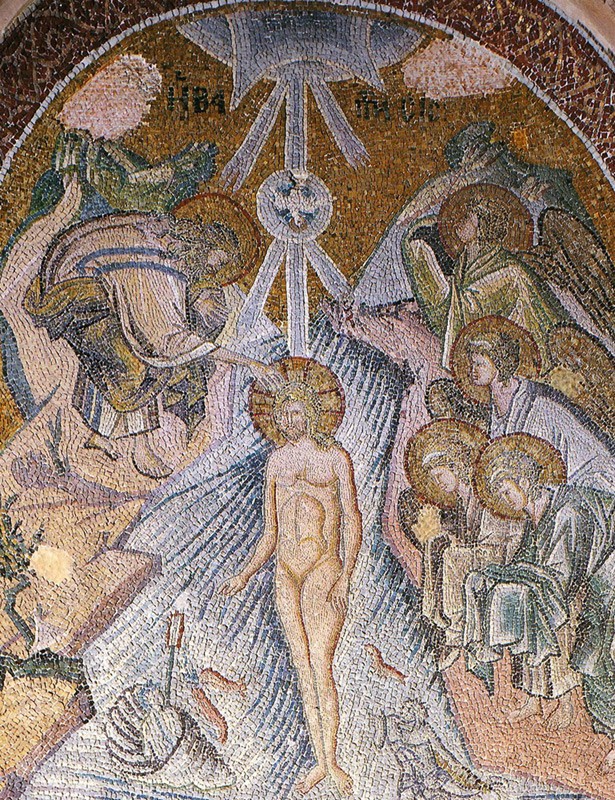
Ons vier vandag Teofanie – letterlik, “die openbaring van God” tydens die Doop van Christus in die Jordaan.
Vandag se Evangelielesing is baie ryk, maar ek wil net by een ding stilstaan, wat dalk op die oog af onbenullig mag lyk, maar van kardinale belang is.
Toe Christus na Johannes toe gekom het om gedoop te word, het Johannes hom “ernstig teëgegaan”. Hoekom? Omdat Johannes die grootste profeet was wat uit ‘n vrou gebore is. En geweet het, soos hy ook aan sy dissipels gesê het, dat Jesus, wat ná hom sou kom, nie met water nie, maar met die Heilige Gees en met vuur sou doop; en dat hy nie werd is om Christus se skoenrieme vas te maak nie. Daarom sê hy vir Jesus: “Ek het nodig om deur U gedoop te word, en kom U na my toe?”
Hierop antwoord Jesus hom enigmaties: “Laat dit nou toe, want só pas dit ons om alle geregtigheid te vervul.” Wat is hierdie “alle geregtigheid”?
Dit kan baie dinge beteken en die Kerkvaders gee dan ook verskillende interpretasies daaraan. Maar een ding wat dit seker beteken, is dat Jesus Homself moes verneder om soos ‘n sondaar die doop van bekering deur te gaan. En Johannes reageer op Jesus se woorde deur Hom in gehoorsaamheid te doop, sonder om sy verwarring verder te probeer opklaar. Hy stem dalk nie saam nie, maar hy doen nogtans wat van hom gevra word.
Jesus se selfvernedering en Johannes se gehoorsaamheid is daarom die voorvereistes vir die openbaring van die Drie-eenheid wat volg op Jesus se doop.
Hierdie twee ingesteldhede is presies van toepassing op die openbaring van die Drie-eenheid in ons lewens. As die dooie water van ons lewens in lewende waters omskep moet word, is ons nederigheid en gehoorsaamheid nodig.
Dié van julle wat in die Ortodokse Kerk opgeneem wil word, moet julle onderwerp aan ‘n hele boel vreemde dinge: antieke sienings oor moraliteit, ‘n dikwels onverstaanbare Tradisie en tradisies, ongemaklike askese en die aanvaarding van die Kerk se houding oor kwessies wat die moderne hiperindividualistiese, ekstreem vryheidsbehepte mens skokkend sal vind. Dit kan geweldig moeilik wees, soos ek self ondervind het toe ek aanvanklik met die Ortodoksie te make gekry het, en dit verg presies die nederigheid en gehoorsaamheid wat ons in hierdie verhaal sien.
En dié van ons wat reeds in die Kerk is, moet ons onderwerp aan die nimmereindigende pelgrimstog van bekering: waaksaamheid, ‘n sensitisering van ons gewete, selfondersoek, die vernedering en beskaming van die bieg.
Maar die wonderlike nuus van hierdie Fees is dat anderkant hierdie nederigheid en gehoorsaamheid, die uitbarsting lê van God se heerlikheid in ons lewens; en die openbaring van die Drie-eenheid se teenwoordigheid – ‘n teenwoordigheid wat die water van die dood omskep in ‘n fontein van lewende water, wat brood en wyn omskep in die Liggaam en Bloed van Christus, en wat ons telkens laat hoor: “Jy is my geliefde seun, my geliefde dogter, in wie Ek ‘n welbehae het.”
Amen.
+
Christ is revealed! Today we celebrate Theophany—literally, “the revelation of God” at the Baptism of Christ in the Jordan.
Today’s Gospel reading is very rich, but I want to pause at just one point, which may at first glance seem insignificant, yet is of cardinal importance.
When Christ came to John to be baptized, John “tried earnestly to prevent Him.” Why? Because John was the greatest prophet born of woman, and he knew—as he also told his disciples—that Jesus, who would come after him, would baptize not with water but with the Holy Spirit and with fire, and that he was not worthy even to loosen the strap of Christ’s sandal. Therefore he says to Jesus: “I need to be baptized by You, and do You come to me?”
Jesus replies to him enigmatically: “Let it be so now, for thus it is fitting for us to fulfill all righteousness.” What is this “all righteousness”?
It can mean many things, and the Church Fathers indeed give various interpretations of it. But one thing it certainly means is that Jesus had to humble Himself in order to undergo the baptism of repentance as though He were a sinner. And John responds to Jesus’ words by baptizing Him in obedience, without trying further to resolve his confusion. He may not agree, but he nevertheless does what is asked of him.
Jesus’ self-humiliation and John’s obedience are therefore the prerequisites for the revelation of the Holy Trinity that follows Christ’s baptism.
These two dispositions apply directly to the revelation of the Holy Trinity in our own lives. If the dead water of our lives is to be transformed into living water, our humility and obedience are required.
Those of you who wish to be received into the Orthodox Church must submit yourselves to a whole host of strange things: ancient views on morality, a Tradition and traditions that are often difficult to understand, uncomfortable ascetic practices, and the acceptance of the Church’s stance on issues that the modern, hyper-individualistic, extremely freedom-obsessed person will find shocking. This can be immensely difficult, as I myself experienced when I first encountered Orthodoxy, and it requires precisely the humility and obedience that we see in this story.
And those of us who are already in the Church must submit ourselves to the never-ending pilgrimage of repentance: watchfulness, the sensitizing of our conscience, self-examination, and the humiliation and shame of confession.
But the wonderful news of this Feast is that beyond this humility and obedience lies the outpouring of God’s glory in our lives, and the revelation of the presence of the Holy Trinity—a presence that transforms the water of death into a fountain of living water, that transforms bread and wine into the Body and Blood of Christ, and that continually lets us hear: “You are My beloved son, My beloved daughter, in whom I am well pleased.”
Amen.